


Quick answer: Usually no. Being nervous does not change your dog’s grooming price. At our North Texas Kontota location there is a special handling service at $25, and it applies only when a dog needs substantially more assistance than a routine appointment, not because a dog is shy or hesitant. Your price is still set by weight, coat type and the service you book. See the full pricing page for the complete list.
If your dog gets nervous at the groomer, you are already worried about how the appointment will go. Finding out it might also cost more is the last thing you need.
Here is the honest version. Most anxious dogs are groomed at the standard price. A small number need enough additional help that the appointment becomes a different job, and that is what the handling service covers.
What does grooming cost for an anxious dog?
Exactly the same as any other dog of that size and coat. Your starting price comes from the weight band:
| Dog’s weight | Bath only, short coat | Full groom with haircut |
|---|---|---|
| 0 to 15 lbs | $78.97 | $153.12 |
| 16 to 25 lbs | $91.33 | $165.48 |
| 25 to 40 lbs | $103.69 | $177.84 |
| 41 to 60 lbs | $128.40 | $190.20 |
| 61 to 70 lbs | $140.76 | $202.56 |
| 71 to 80 lbs | $153.12 | $214.92 |
Behavior-related charges, when they apply at all:
| Service | Price | When it applies |
|---|---|---|
| Special handling | $25 | When a dog needs substantially more assistance than a routine appointment |
| Dematting | $55 to $75 by weight | When a sensitive dog’s coat has matted because grooming has been difficult to keep up |
Every visit also has a $119.99 minimum, with tax at 8.25% and a 3% fuel surcharge applied at checkout. Seniors and veterans get $10 off.
The distinction that matters: there is a difference between a dog that feels nervous and a dog whose behavior genuinely changes the amount of work involved. The first is most dogs, and it costs nothing extra.
Why can grooming take more work for an anxious dog?
Grooming is not just a wash and a trim. A groomer works around the face, ears, paws and underside using equipment that can be unfamiliar and loud.
A comfortable dog lets the appointment move at a steady pace. An anxious dog may need breaks, slower introductions to each tool, or extra time to settle before a step can begin. A dog that panics at the dryer needs a different approach from one that stands calmly. Another dog may love the bath and object strongly to having its paws handled.
Sometimes that is five extra minutes. Occasionally it is a fundamentally different appointment. The charge, when it applies, reflects the second case.
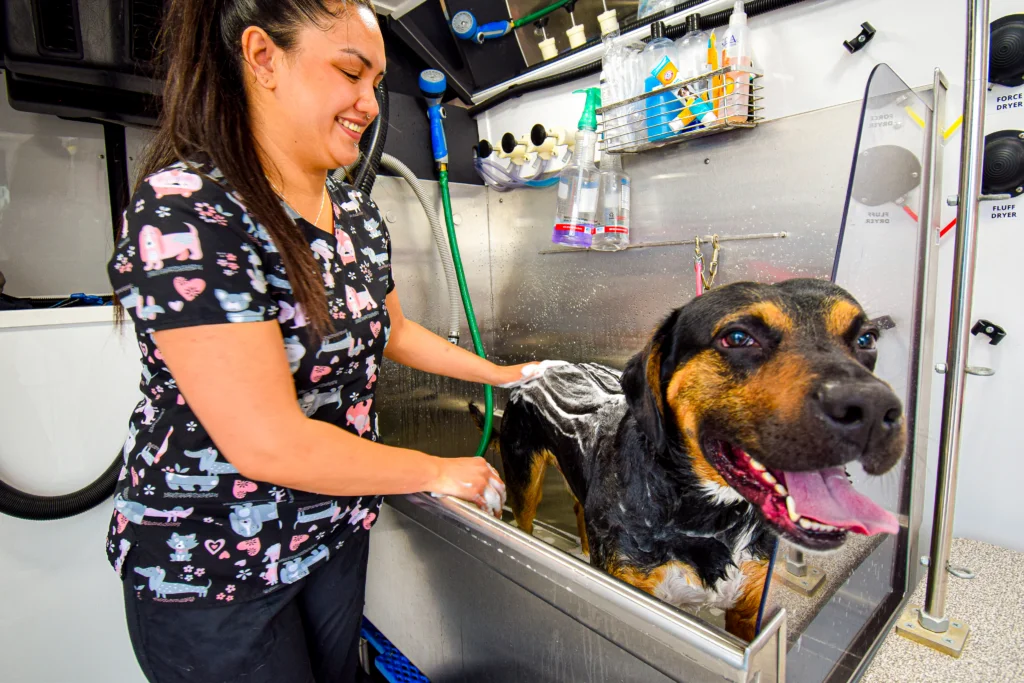
Aggressive or frightened? They look the same and they are not
A dog that growls or snaps during grooming is often not aggressive in daily life. These are frequently defensive reactions to fear, discomfort or something unfamiliar.
Picture a dog meeting a high-velocity dryer for the first time. The noise and sensation are overwhelming, and barking or pulling away is a reasonable response rather than evidence of temperament. A dog that growls when a paw is lifted may be sore, sensitive or simply unused to it.
The behavior still has to be taken seriously, but knowing the trigger changes how a groomer approaches the appointment. What does not change is that safety comes first. If a dog is trying to bite or is too distressed to continue, the right call is to stop rather than push through.
Does mobile grooming help nervous dogs?
For many dogs, yes, because it removes several stress points before grooming even starts.
| Stress point | Drop-off salon | Mobile grooming |
|---|---|---|
| Car ride to an unfamiliar building | Yes | No |
| Other dogs barking nearby | Usually | No |
| Waiting before and after the groom | Often | No |
| Kennel time between stages | Common | No |
| Fear of clippers, dryers or handling | Yes | Yes, unchanged |
That last row is the honest part. If your dog’s fear is about the equipment or being handled, a quieter location does not solve it. What mobile grooming removes is the surrounding activity that makes an already nervous dog feel worse.

Why do some dogs react badly to grooming?
- Unfamiliar handling. Grooming asks a dog to tolerate having feet held, tails lifted and equipment near the face. Even affectionate dogs can find that uncomfortable.
- A bad experience in the past, or never having been gradually introduced to brushing, bathing and nail care as a puppy.
- Physical discomfort. Matting is the most common example. A tangled coat pulls against the skin as the dog moves, so an already sensitive dog reacts defensively when that area is touched.
- Age. Older dogs can develop joint and mobility discomfort that makes standing or lifting a leg genuinely painful.
Worth a vet visit: if your dog’s behavior has changed suddenly, especially a strong reaction when one specific area is touched, discuss it with your veterinarian. Resistance during grooming is sometimes pain rather than a behavioral problem.
What happens if a dog tries to bite the groomer?
The groomer has to weigh both your dog’s wellbeing and their own safety, then decide whether the appointment can continue.
Sometimes a pause or a change of approach is enough. Sometimes continuing would increase the risk of injury or make the fear worse, and the right outcome is to stop, complete only what the dog can tolerate, and talk about next steps.
Professional grooming is not behavioral rehabilitation. Groomers can be patient and make reasonable adjustments. They should not be expected to work through severe aggression when it puts the dog or the groomer at risk.
If your dog has bitten at a previous appointment, tell us before booking. That is not a disqualification, it is information that helps us plan properly and decide honestly whether we are the right fit.

Are certain breeds harder to groom?
Breed is a poor predictor. A Chihuahua can be completely relaxed about handling while a Golden Retriever panics at the dryer. One Poodle groomed since puppyhood stands calmly through a full haircut, while another with no grooming history struggles with the same process.
Breed affects coat requirements, size and physical workload, all of which show up in the price table. It does not reliably predict anxiety. Past experience, socialization, temperament, health and familiarity matter far more.
Do senior dogs need special handling?
Sometimes, and not because of behavior. An older dog may struggle to stand for long periods, lift a leg or hold a position, and may be more sensitive to noise.
A dog that pulls away when a leg is lifted is usually uncomfortable rather than badly behaved. Groomers need to work around those limits rather than through them.
Age alone does not add a charge. If your senior dog has arthritis or mobility problems, let us know what they can and cannot do comfortably, and talk to your veterinarian about any limits before the appointment.

How to prepare an anxious dog for grooming
- Practice handling at home. Briefly touch the paws, lift an ear, brush a small section. Pair it with something your dog likes.
- Keep sessions short. Stop before your dog gets overwhelmed, not after. The goal is predictability, not holding them still until they give up.
- Brush regularly, especially long and curly coats. Preventing matting removes one of the most common sources of grooming discomfort.
- Keep grooming day calm. Let your dog out beforehand and avoid scheduling it in the middle of a hectic afternoon.
- Tell the groomer everything. Including a history of biting, severe fear or difficulty with handling. Hiding it helps nobody and makes the appointment less safe.
Can regular grooming reduce anxiety over time?
For many dogs it does. Dogs cope better when they know what to expect, and regular appointments with consistent handling make the process familiar rather than alarming.
With puppies this matters most. Short, positive early sessions with brushing, bathing and gentle handling build confidence long before a complicated haircut is needed. Adult dogs can improve too, though progress depends on why the anxiety is there.
One caveat worth stating plainly: repeatedly forcing a frightened dog through stressful appointments does not build tolerance. If your dog has significant grooming anxiety, a veterinarian or qualified behavior professional can help you build a gradual plan.
Get an estimate for your dog
Your dog’s price starts with weight, coat and the service you choose. Being nervous does not change it. Special handling is a $25 service used when a dog genuinely needs substantially more assistance, and it is discussed with you rather than added quietly.
Prices are specific to our North Texas franchise and are starting points, not guaranteed final quotes. If you are in Frisco, McKinney, Prosper, Denton or a surrounding community, start with our instant price estimator, then tell us about your dog’s history when you book.
Check My Dog’s PriceSee Full Pricing
Call 800-216-6103 or text 980-404-2922. Open 7:00am to 10:00pm, seven days a week.
Anxious and aggressive dog grooming FAQs
Does dog grooming cost more for an aggressive dog?
Not automatically. At our North Texas Kontota location a $25 special handling service applies when a dog needs substantially more assistance than a routine appointment. Most nervous dogs are groomed at the standard price for their weight and coat.
Will a groomer refuse to groom my dog?
It can happen when a dog cannot be groomed safely, for the dog’s protection as much as the groomer’s. The usual outcome is completing what the dog tolerates comfortably and talking about next steps rather than refusing outright.
Is mobile grooming better for an anxious dog?
Often, because it removes the car ride, the waiting and the other dogs. It does not change fear of clippers, dryers or handling, which stays the same wherever the appointment happens.
Should I tell the groomer my dog has bitten before?
Yes, always, before you book. It lets us plan the appointment properly and be honest about whether we are the right fit for your dog.
Do senior dogs cost more to groom?
No. Age alone adds nothing, and seniors receive $10 off. Additional handling applies only if a dog genuinely needs substantially more assistance.
Can grooming anxiety be improved?
For many dogs, yes, through consistent positive appointments and gentle handling practice at home. For severe anxiety, a veterinarian or qualified behavior professional should be involved.
Disclaimer: All prices listed in this article are provided for general informational purposes only and reflect pricing available at the time of publication. Pricing varies by location, as Kontota locations are independently owned and operated. All prices, services, packages, promotions, discounts, fees, and availability are subject to change at any time without prior notice and may vary based on your dog’s breed, size, weight, coat type, coat condition, temperament, grooming requirements, and service location. Additional charges, including applicable taxes, travel fees, fuel surcharges, and optional services, may apply. Published prices and online estimates are not guaranteed quotes or binding offers. Final pricing will be confirmed by your servicing Kontota location based on the services requested and your dog’s individual grooming needs. Please contact your local Kontota location or use our online pricing estimator for the most current pricing information.
