


Somebody asked me last week what the difference is between a mobile grooming visit and a wash-and-cut at the local salon. I said: that depends entirely on which mobile service and which salon. The label doesn’t tell you much. The list of what actually happens to the dog does. So here’s an honest breakdown of what a thorough mobile grooming session covers, and why it matters for your San Antonio dog specifically.
Quick answer: A thorough mobile grooming session covers coat, skin, nails, paws, ears, teeth, and eyes in a single one-on-one visit at your door. The difference between a thorough service and a basic wash-and-cut is significant: more areas covered, more time per dog, more skill required. The best way to evaluate quality is to look at what’s actually included, not just what the price says.
The Difference Between ‘Washed’ and ‘Groomed’
A basic wash-and-cut does three things: bath, dry, trim. That’s it. A thorough grooming session is a different scope entirely. It includes coat work (deshedding, brushing, dematting where needed), skin inspection, nail trimming and filing, paw pad cleaning and trim, ear cleaning, teeth cleaning, and a trim or haircut appropriate to the breed. That’s 7 to 10 distinct service categories depending on how you count them. A brand that says "27-step process" is either counting individual actions within those categories, or it’s marketing copy. What matters to you as the owner is which categories are covered and whether the person doing it knows what they’re doing.
What Every Area of a Thorough Groom Actually Covers
Here’s the section-by-section breakdown:
| Area | What a Thorough Session Does | Why It Matters |
|---|---|---|
| Coat | Pre-bath blow-out, deshedding shampoo and conditioner, post-bath drying, brushing, breed-appropriate trim | Packed undercoat traps heat and causes skin issues if not removed |
| Skin | Visual inspection at the coat base during brushing | Catches hot spots, redness, or early irritation before it worsens |
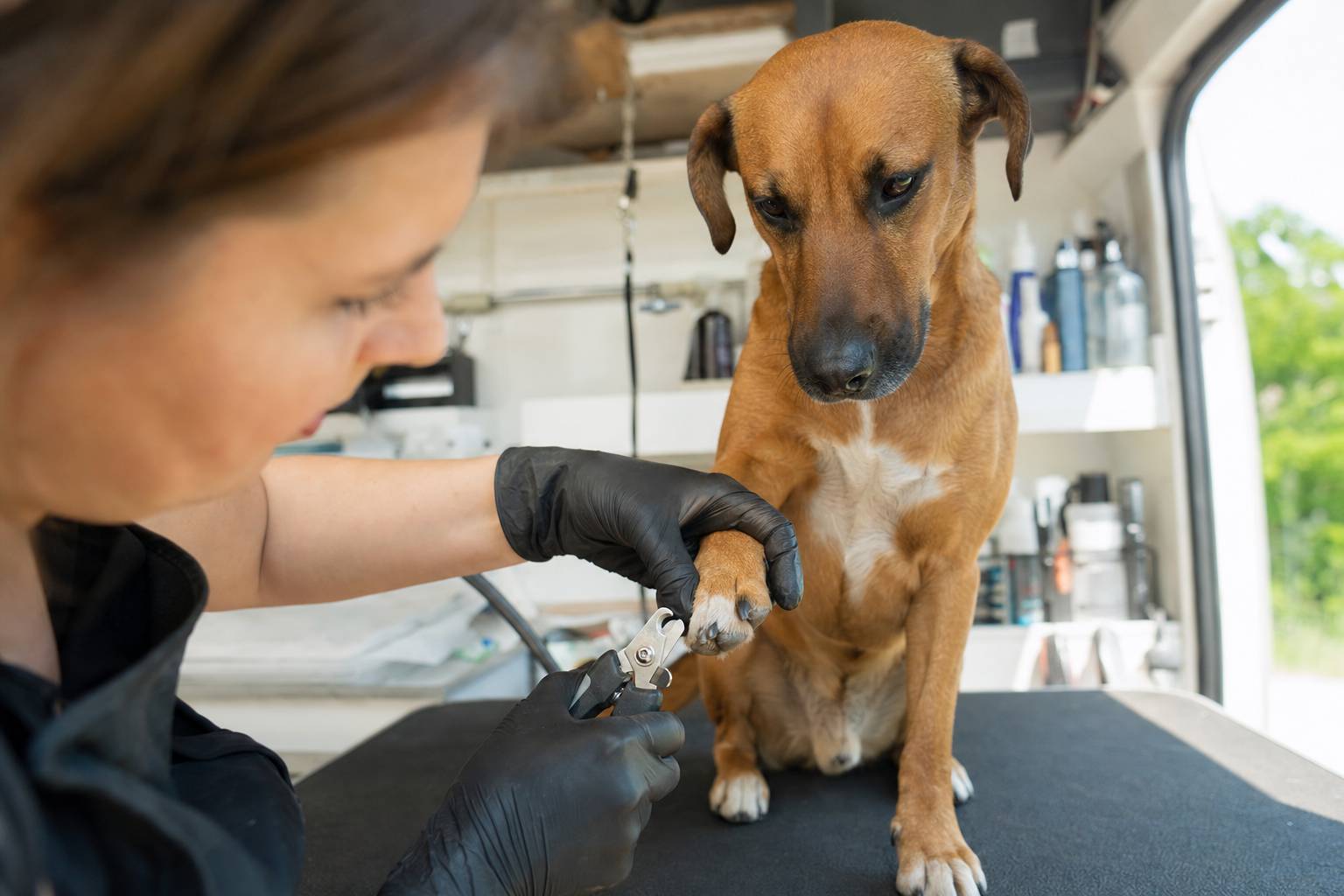
| Nails | Clip and file to appropriate length | Overgrown nails shift posture and cause joint stress over time |
| Paw pads | Clean between toes, trim fur, check pad condition | San Antonio summer pavement causes pad cracking; catching early matters |
| Ears | Clean ear canal with safe solution, dry, inspect for odor or redness | Ear infections start quietly and cost $150 to $300 at the vet untreated |
| Teeth | Brush with enzymatic toothpaste | Surface cleaning reduces buildup between vet-supervised cleanings |
| Eyes | Wipe area clean, trim hair around eyes if needed | Prevents staining and keeps lines of sight clear |
What Natural Shampoo Actually Does Differently
Generic grooming shampoos use sulfates and synthetic fragrances. They clean the coat but they strip natural oils from the skin at the same time. For a dog who gets groomed every 6 to 8 weeks, that’s a lot of stripping. Natural, enzyme-based formulas clean without stripping. For dogs with sensitive skin, the difference shows up in coat texture and scratch frequency within two weeks of switching. Custom-formulated shampoos go a step further: the pH, lather density, and conditioner ratio are built around dog skin specifically, not adapted from human or general-pet formulas. Whether you can feel the difference on the dog? Most owners say yes by the second visit.
Why CPR Certification on a Groomer Matters
This one’s practical, not emotional. A grooming van is a small, enclosed space. Dogs overheat, have reactions to stress, or occasionally have health events nobody knew about before arriving. A groomer with CPR certification knows what to do in those first minutes. That’s not the norm in the industry. Most groomers have no emergency training at all. In a mobile setting where the nearest vet clinic might be 8 to 15 minutes away, the difference between a certified and uncertified groomer can be significant. It’s one of the specifics worth asking about when you’re evaluating a mobile grooming San Antonio service.
Basic Wash vs. Thorough Mobile Groom: Side by Side
| Service Element | Basic Wash and Cut | Thorough Mobile Groom |
|---|---|---|
| Bath and dry | Yes | Yes, with deshedding shampoo and conditioner |
| Coat trim | Yes, basic | Yes, breed-appropriate with scissor finish |
| Nail trim | Sometimes | Yes, plus filing |
| Ear cleaning | Rarely | Yes, full canal cleaning |
| Teeth cleaning | No | Yes, enzymatic brushing |
| Skin inspection | No | Yes, visual check during brushing |
| Paw pad cleaning and trim | No | Yes |
| Natural shampoo formula | Varies | Yes, custom-formulated |
How Often Is Right for San Antonio Dogs?
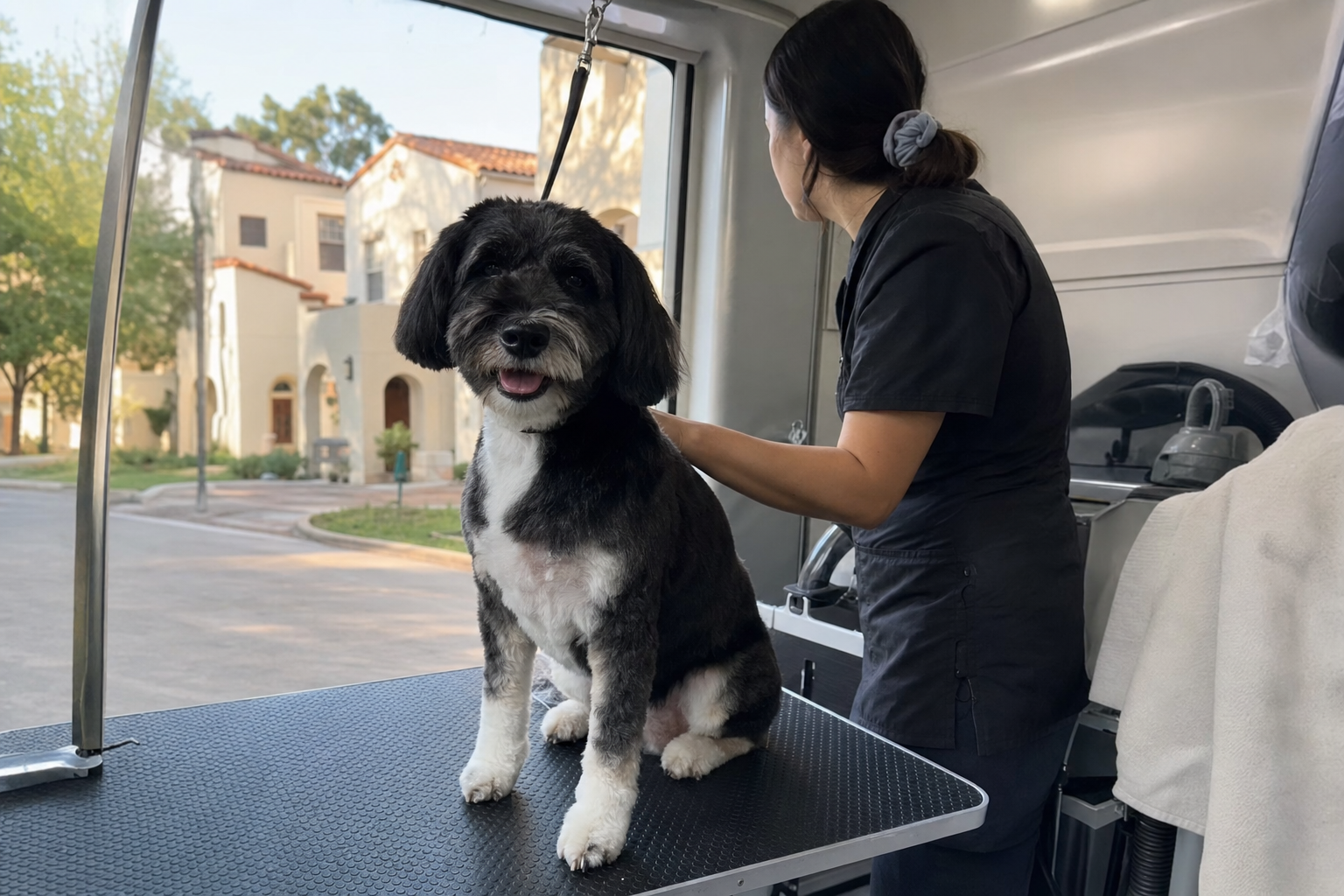
San Antonio runs warm most of the year. Dogs that spend time outdoors, especially during summer when temperatures stay above 90 degrees Fahrenheit through October, need more frequent grooming to manage coat heat retention and skin health. Standard recommendation for most breeds: every 6 to 8 weeks. Double-coated breeds in summer: every 4 to 6 weeks. Dogs with fast-growing low-shedding coats (doodles, poodles, schnauzers): every 6 weeks maximum to prevent matting. Going longer than 10 weeks between grooms generally means the next session takes significantly more time and costs more. The mobile dog grooming services page has a full breakdown of what each Kontota visit includes.
How to Read the Results of a Good Session
- The coat is dry all the way to the skin, not just surface-dry. Press two fingers in at the neck and shoulder. Should be completely dry.
- Nails don’t click on hard floors when the dog walks normally after the appointment.
- Ears smell clean or neutral, not perfumed. Perfume masks odor instead of removing it.
- The trim line is consistent on both sides of the dog, same length front and back.
- Skin at the coat base looks clean and pale pink, no redness at the roots.
If you’re in San Antonio and want to get on the schedule, you can dog ear cleaning and other service details on the Kontota site, along with booking information for your zip code.
The label ‘mobile grooming’ covers everything from a folding table in a parking lot to a fully equipped van with a certified groomer. What you’re paying for is the specifics of what happens to the dog. Those specifics are worth knowing.
