


Lancaster County does not look like Houston or Scottsdale. The roads wind, the neighborhoods mix farmland and suburbs, and the dog population ranges from working farm dogs to apartment-sized companions in downtown Lancaster Borough. What connects them is that most dog owners here are at least 20 minutes from a well-reviewed grooming salon. Mobile grooming services solve that problem without the drive.
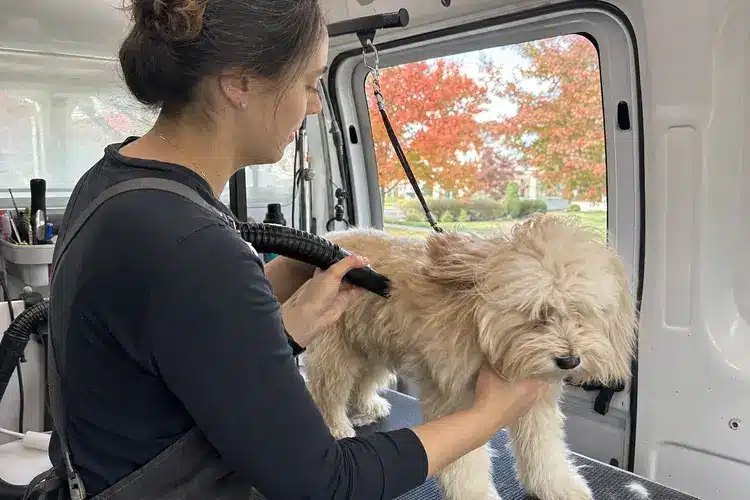
Mobile dog grooming in Lancaster, PA means a grooming van comes to your driveway anywhere in the county. It is especially useful for rural addresses, multi-dog households, senior dogs, and puppies getting their first few grooms in a low-stress setting.
Lancaster County Rural Roads and Why the Van Comes to You
A lot of Lancaster County addresses are not near anything. Lititz, Strasburg, Quarryville, Denver — these are places where driving 30 or 40 minutes round-trip to drop off your dog is a real time cost, especially when you factor in the wait. Mobile grooming flips that. The groomer drives to you, works in a self-contained van in your driveway, and your dog is done without a car ride at all.
For rural properties with long driveways or farm lanes, the van needs a flat area to park and operate. A standard gravel or paved driveway works. If you have a tight turn-around, flagging it in the booking notes helps.
Pennsylvania Autumn Coat Changes and What to Do About Them
Lancaster gets four real seasons, and autumn triggers coat changes in a lot of breeds. Dogs start building their winter coats in September and October, which means increased shedding and more potential for mats if the dead undercoat is not brushed out. A fall groom timed between mid-September and early November helps clear the old coat before the winter growth comes in fully.
Spring is the opposite — winter coats blow out in March and April, and a deshedding treatment can cut the amount of fur you find on your furniture by a significant margin. If you have a double-coat breed like a Bernese Mountain Dog, Border Collie, or Husky, booking seasonal appointments in both spring and fall is worth doing.
Farm Dogs vs. House Dogs: Grooming Differences in Lancaster
Lancaster has both types, and their grooming needs differ.
| Dog Type | Common Breeds | Grooming Frequency | Key Concerns |
|---|---|---|---|
| Farm / working dog | Border Collie, Australian Shepherd, Labs | Every 6-8 weeks | Burrs, mud, thick undercoat buildup |
| Suburban companion dog | Doodles, Shih Tzus, Bichons | Every 4-6 weeks | Matting, eye and ear maintenance |
| Large outdoor dog | Golden Retriever, Bernese, Husky | Every 6 weeks, seasonal deshed | Heavy seasonal shedding, paw pads |
| Small indoor dog | Yorkies, Maltese, Cavapoos | Every 4-5 weeks | Fast-growing coat, dental and ear care |
Farm dogs tend to need a good detangle and bath more than a precise trim. House dogs with continuously growing coats need more frequent appointments to stay out of mat territory. The mobile groomer can adjust the service approach based on what your dog actually needs at that appointment.
Puppy’s First Groom in Lancaster: What to Expect
The first groom is a big deal for puppies. How it goes sets the tone for how your dog handles grooming for the rest of its life. A mobile grooming appointment has some real advantages for a puppy’s first visit: there are no other dogs waiting in kennels, no chaotic lobby, and no long car ride building up anxiety before the appointment even starts.
Puppies can start getting groomed as soon as their vaccine series is complete, usually around 12 to 16 weeks. Early puppy grooming appointments are kept shorter and gentler — the goal is a positive experience, not a full showroom cut. Getting a puppy comfortable with nail trims, ear cleaning, and water early makes every appointment easier going forward.
Between-Visit Brushing for Lancaster Dog Owners
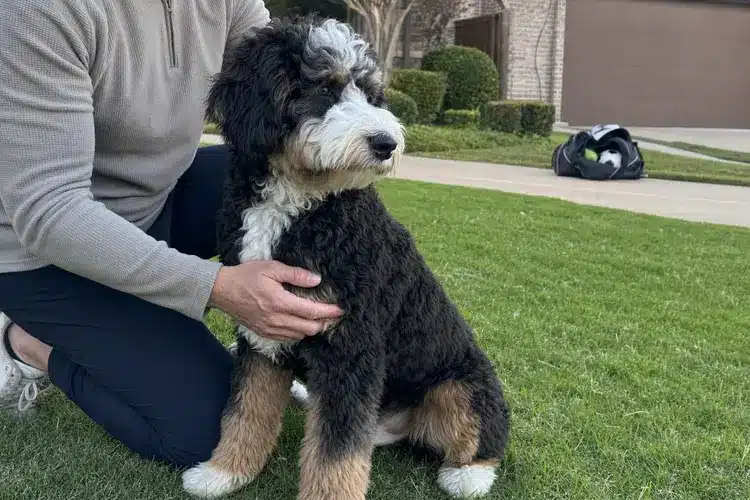
Regular home brushing between appointments extends how long each groom looks good and helps prevent the deep mats that require extra time (and sometimes a shorter cut than you wanted) at the next visit. A few practical points:
- Brush in the direction of coat growth, working through small sections at a time
- Pay extra attention to friction areas: behind the ears, under the collar, armpit area, and where the leg meets the body
- Use a slicker brush for most coat types; a metal comb to check for mats after brushing
- For double-coat breeds, an undercoat rake pulls out loose hair without cutting through the outer coat
- Autumn is the highest-priority brushing season in Pennsylvania — coat transitions happen fast
How to Schedule Mobile Grooming in the Lancaster Area
Booking is straightforward. Enter your Lancaster County address on the Kontota site, pick a time that works, and the van handles the rest. If you are booking a puppy’s first appointment or a dog that has had difficult grooming experiences before, the notes field is a good place to mention that so the groomer knows what to expect.
For rural addresses that are a bit out of the way, availability may be more limited on certain days. Booking a few weeks ahead gives you better slot options. If you are setting up a recurring appointment, locking in the same day every 6 to 8 weeks is the most reliable way to stay on schedule. Browse mobile grooming services and check what is available for your address.
