


If you have run your hands through your dog’s coat lately and felt something that does not want to let go of the comb, you are probably asking the question we hear almost every week: what is this going to cost?
The honest answer is that a matted dog is not the same appointment as a dog with a clean, maintained coat. It is a different job, with different steps, and often a different outcome for the haircut itself. Understanding why is the fastest way to understand the price.
Our Essentials haircut pricing is built on your dog’s weight, and dematting is billed as an additional service when the amount of matting creates substantially more work. A 16–25 pound dog’s regular haircut is currently about $165, and the dematting fee for that size is about $55. A 41–60 pound dog’s haircut is about $190, with a dematting fee of about $65.
Those are estimates, not quotes. The amount of matting, your dog’s size and the overall condition of the coat all affect what the groom actually requires. For a starting number based on your own dog, use our instant price estimator.
What a mat actually is, and why it changes the appointment
A mat is not a knot sitting loosely in the hair. It starts when shed hair fails to fall away from the body and instead wraps around hair that is still anchored in the follicle. Movement, humidity and friction then twist that bundle tighter, and over days and weeks it compresses toward the skin until it behaves less like hair and more like felt.

That distinction matters because of what sits underneath. A tight mat holds moisture against the skin, restricts airflow and pulls on the surface every time the dog moves.
So when a groomer looks at a matted coat, we are not calculating how much hair there is. We are calculating how much of it can be safely separated, how close it sits to the skin, and how much time the dog can reasonably tolerate being worked on.
A routine groom starts with a coat that can be washed, dried, brushed and prepared for clipping. A matted coat has to be dealt with before any of that is possible.
Why matting is a bigger problem in a North Texas summer
Coat condition is a year-round issue everywhere. What changes here is the consequence.
A North Texas summer regularly runs above 100°F for weeks at a stretch, with the humidity that comes off the Gulf on top of it. A dog’s coat is a cooling system — air moves through it, and heat and moisture move out. A compressed mat blocks that airflow completely. A heavily matted dog in July is not just untidy; they are carrying a layer that stops them regulating temperature properly, over skin that stays damp and cannot dry.
That trapped moisture is what turns a grooming problem into a skin problem. Hot spots and irritation under mats are considerably more common in our summers than they are in a dry climate, and the dogs we see with the worst skin underneath are almost always the ones who have been swimming.
That last point catches a lot of owners out. Backyard pools are everywhere in Collin and Denton counties, and plenty of North Texas dogs spend the summer in and out of Lake Lewisville, Lake Grapevine or Lake Ray Roberts. Water tightens an existing tangle. A dog who swims and then air-dries in the yard will mat faster than the same dog in February — every time.
Autumn brings a second local problem: grass burrs. Sandburns are common across North Texas lawns and unmown lots, and they work their way into the coat at the ankles, the armpits and the belly. Once one seeds into a tangle, the coat wraps around it and the whole thing tightens from the inside.
Our mild winters are the one genuine advantage. Dogs here stay outdoors most of the year, which means more exercise, more friction and more debris in the coat — but it also means a short haircut after a bad mat is far less of a problem in January than it would be further north.
Where mats form first
The places we find mats are not random. They form where hair experiences repeated friction or moisture:
- Behind the ears — the single most common spot on long-coated dogs
- Under the collar — constant movement, and often damp after a walk
- Armpits and the backs of the legs — the coat rubs against the body with every step
- Around the tail and sanitary area — collects moisture and debris
- Chest and chin — on dogs who drink enthusiastically or wear a harness
If you want to know where your own dog stands, start in those five places rather than looking at the coat as a whole.
The comb test: a better check than looking
This is the single most useful habit a pet parent can build, and it takes about ninety seconds.

Part the coat with your fingers down to the skin, then run a steel comb from the skin outward through the full length of the hair. If the comb travels cleanly, that section is genuinely brushed. If it stops partway down, there is a tangle beneath the surface that a brush has been skating over.
This is why curly and wavy coats are so deceptive. The top of the coat can look fluffy and well kept while the hair sitting against the skin has already started to compress. A dog can look perfectly fine from across the room and still be matted underneath.
If the comb stops, stop. Repeated hard pulling on a tight mat is uncomfortable for the dog and teaches them that grooming is something to dread, which makes every future appointment harder.
Does a matted dog always have to be shaved?
No, and anyone who tells you otherwise is not really assessing the dog.

Small, isolated tangles can usually be worked through as part of normal coat preparation. The decision point is how tight the matting is and how close it sits to the skin. When a mat has compressed against the body, there is no safe space between the mat and the skin for a comb or a blade to work through gently.
In those cases, removing the matted coat is the safer and kinder option. That is a disappointing sentence if you love your dog’s long, fluffy haircut, but the condition of the coat has to come before the style. No responsible groomer should spend an hour dragging a comb through severe matting to preserve a few extra inches of hair.
And a short haircut in that situation is not a failed groom. It is a reset. The skin gets air and can be properly cleaned and dried, and the next appointment starts from a coat that can actually be maintained.
What it costs: dematting fees by size
Dematting is priced separately from the haircut because it is separate work. Our Essentials pricing currently lists the fee by weight:
| Dog weight | Estimated dematting fee |
|---|---|
| 0–40 lbs | About $55 |
| 41–70 lbs | About $65 |
| 71–110 lbs | About $75 |
So a 16–25 pound dog has an estimated dematting fee of $55, a 61–70 pound dog is about $65, and a dog in the 81–90 pound category is about $75.
Two things worth being clear about. First, these fees cover the additional dematting work only — they are not the cost of the grooming appointment. The regular haircut price is separate. Second, this is not a charge that applies to every tangle. A few small knots are part of normal coat work. The fee exists for the situations where the volume of matting genuinely changes the job.
Putting the two numbers together
The easiest way to budget is to start with your dog’s regular Essentials haircut price and then consider whether significant matting is likely to add the dematting service on top of it.
| Dog weight | Essentials haircut | Dematting, if needed |
|---|---|---|
| 0–15 lbs | About $153 | About $55 |
| 16–25 lbs | About $165 | About $55 |
| 25–40 lbs | About $178 | About $55 |
| 41–60 lbs | About $190 | About $65 |
| 61–70 lbs | About $203 | About $65 |
| 71–80 lbs | About $215 | About $65 |
| 81–110 lbs | About $227–$252 | About $75 |
These are estimated Essentials prices, not guaranteed quotes. The actual appointment still depends on the condition of your dog’s coat and what the groom requires on the day. If you want the full size-by-size breakdown without the matting variable, we have set it out in our guide to dog haircut costs in North Texas.
Why curly and long coats mat so quickly
Some coats are simply built to hold onto shed hair. Poodles, doodles, Shih Tzus, Maltese, Yorkies and similar long or curly-coated dogs have hair that keeps growing rather than shedding out cleanly, so the loose hair stays caught in the coat and new growth tangles into it.
That is excellent news for your floors and considerably more work for the coat.
The tighter the curl, the faster it happens, and the harder it is to see. This is also why professional grooming does not replace brushing at home. A groom resets the coat; brushing is what keeps it from compressing again in the four to six weeks in between. If you want to keep a long haircut on a curly-coated dog, the maintenance is not optional — it is the whole strategy.
Spring is when this catches most local owners out. North Texas has a long, heavy pollen season, and oak and cedar elm pollen settles into a curly coat and gives loose hair something to bind to. Dogs who were perfectly manageable in February start arriving tangled in April, with no change in the owner’s routine.
Brushing at home: what actually works
If you are maintaining a long or curly coat, use a slicker brush first and follow it with a steel comb. The brush moves the coat; the comb tells you whether you actually got through it.
Work in sections, lifting the coat and brushing from the skin outward, rather than running the brush over the surface. Surface brushing is exactly how a coat ends up looking groomed and matting underneath at the same time.
A few minutes several times a week does more than an hour once a month. And one rule that saves a lot of appointments: always brush before a bath if the coat is tangled. Water tightens an existing tangle. Bathing a matted dog sets the mat — and that applies just as much to a swim in the lake as it does to a bath at home.
What happens when a matted dog comes to us
The first thing we do is assess the coat, not start working on it. We look at where the mats are, how tight they are, and how close they sit to the skin. From there we can tell you honestly whether the coat can be worked through or whether the affected hair needs to come off.
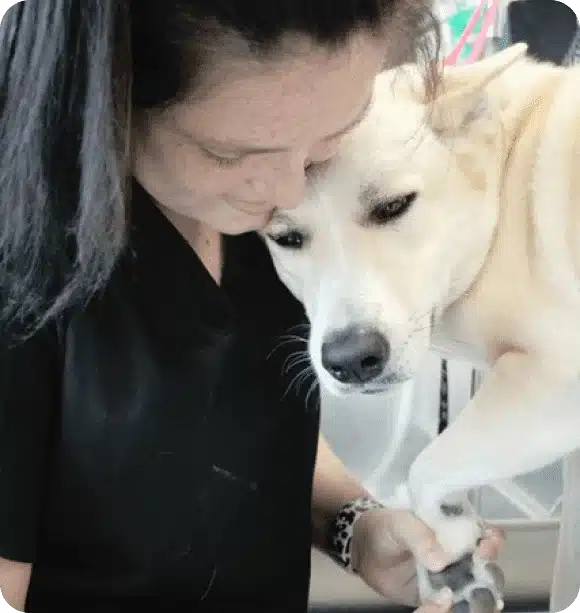
Once matted hair has been removed, we can properly clean and dry the dog and finish the areas that can be safely groomed. The dog leaves comfortable, and the next appointment is usually far simpler because we are starting from a manageable coat.
You will also get an honest report on what we found. If there is something under the coat you should know about, we would rather tell you than groom over it.
When the skin underneath needs a vet, not a groomer
This is a line worth drawing clearly.
Mats trap moisture and pull on the skin, and what is underneath is not always healthy. If redness, swelling, an open or weeping area, a strong odor or a hot spot appears once the coat comes off, that is a veterinary conversation.
A groomer can remove the problem coat and make the dog far more comfortable. A groomer is not a substitute for a veterinary examination. If a mat has been hiding a skin problem, our job is to make sure you know about it — not to tidy the coat and move on.
What a matted coat actually costs you
The dematting fee is the part that shows up on the invoice, and it is genuinely the smaller cost.
The larger one is the haircut you did not want. A coat that has compressed against the skin limits what a groomer can do with it, and by the time matting is severe, the choice is no longer between a long style and a short one — it is between a short style and an uncomfortable dog. Every inch of length you were trying to protect is the first thing that has to go.
Then there is the time you lose getting it back. A coat clipped down after severe matting takes months to grow out to a length you can style again, and those are months of brushing a coat that is in an awkward middle stage.
So the number worth planning around is not $55 to $75. It is the four-to-six-week rhythm of brushing sessions and appointments that keeps you out of that column entirely — and in North Texas, where humidity, pool water, pollen and grass burrs all work against a long coat, that rhythm needs to be a little tighter than owners expect.
Run the comb from the skin outward tonight. If it travels clean, you have nothing to do. If it stops halfway down, that is your answer, and it will not improve on its own. Mats tighten; they never loosen.
If the comb is stopping and you would rather have someone look at the coat properly, you can book a mobile appointment and we will come to you across the Dallas-Fort Worth area — Frisco, McKinney, Prosper, Denton, Aubrey, Carrollton, Flower Mound, Lewisville and the surrounding communities.
Frequently asked questions
Is dematting always charged?
No. Small tangles are handled as part of normal coat preparation. The fee applies when the volume of matting requires substantially more time or changes how the groom has to be performed.
Can I just ask for a short haircut to avoid the dematting fee?
Sometimes, yes. If the coat is coming off anyway, the dematting work may not be needed. That is a decision best made by looking at the dog, so tell us the coat’s condition when you book and we will talk through the options.
Is it cheaper to prevent matting than to treat it?
Almost always. A maintained coat keeps your appointments predictable and avoids both the additional service and the shorter haircut that severe matting can force.
My dog is badly matted and I feel terrible about it. Should I be?
No. We see matted dogs regularly — it happens to attentive owners with busy months. The most useful thing you can do is describe the coat honestly when you schedule, so we arrive prepared for the job in front of us.
Disclaimer: All prices listed in this article are provided for general informational purposes only and reflect pricing available at the time of publication. Pricing varies by location, as Kontota locations are independently owned and operated. All prices, services, packages, promotions, discounts, fees, and availability are subject to change at any time without prior notice and may vary based on your dog’s breed, size, weight, coat type, coat condition, temperament, grooming requirements, and service location. Additional charges, including applicable taxes, travel fees, fuel surcharges, and optional services, may apply. Published prices and online estimates are not guaranteed quotes or binding offers. Final pricing will be confirmed by your servicing Kontota location based on the services requested and your dog’s individual grooming needs. Please contact your local Kontota location or use our online pricing estimator for the most current pricing information.
